




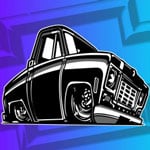
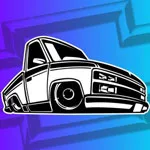
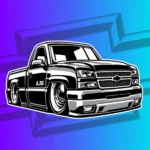
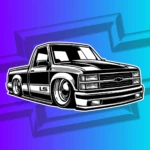








Chevy, GMC and Ford nameplates are harder to keep straight than they look. Ask five truck people what year the “GMC Sierra” started, or when the Blazer became the Tahoe, and you’ll get five different answers. Usually they are confident, and usually they are at least a little wrong. Chevy and GMC sold the same trucks under different names, and Ford renamed its whole lineup mid-decade, so it is easy to get turned around.
We built the chart below while sorting out our own parts-fitment data, and it turned out too useful to keep to ourselves. It covers every Chevy, GMC, and Ford truck and SUV nameplate from 1947 to today. For each name, it shows when it started, when and why it got a new name, and which badge belongs to which platform. Hover any bar for the details, or switch to the table view for a plain list. Also, if you have a Chevy or GMC truck in front of you, our VIN decoder reads the serial number on any 1947-98 truck.
- Chevrolet
- GMC
- Ford
- hatched = numbering unconfirmed
| Make | Model / series | Years | Note |
|---|---|---|---|
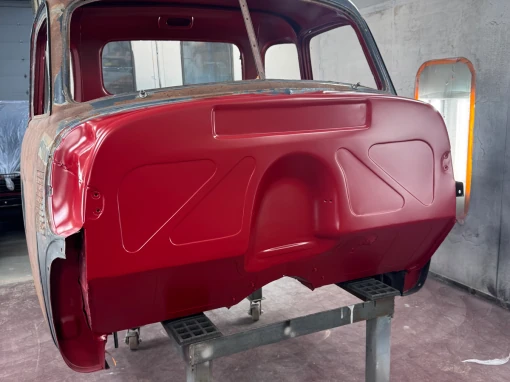
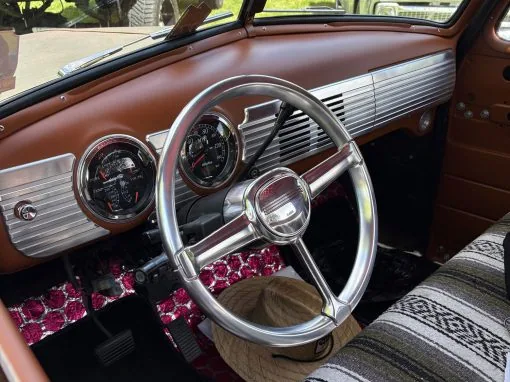
| Chevrolet | 3100 · 3600 · 3800 | 1947–1959 | Advance Design (’47–’55) and Task Force (’55–’59) half, ¾ and 1-ton series, before C/K numbering. |
| Chevrolet | C10 · C20 · C30 (K10/K20/K30) | 1960–1987 | First- through third-generation C/K. Replaced by the C1500 family in 1988; the square body Suburban, Blazer and crew cab carried on as R/V trucks through 1991. |
| Chevrolet | C1500 · C2500 · C3500 (K-series) | 1988–1998 | GMT400 generation — the trucks enthusiasts call “OBS”. |
| Chevrolet | Silverado | 1999–2026 | C/K designation dropped entirely; Silverado becomes the model name. Four platform generations since: GMT800 (’99–’06), GMT900 (’07–’13), K2XX (’14–’18) and T1XX (’19–present). An all-new fifth generation for MY2027 was announced in June 2026. |
| Chevrolet | Blazer / K5 Blazer | 1969–1994 | Full-size SUV on the C/K platform. GMC’s twin is the Jimmy — never “GMC Blazer”. K5 prefix through 1988, then plain “Blazer” 1989–94, before becoming the Tahoe. |
| Chevrolet | Tahoe | 1995–2026 | Replaced the full-size Blazer for 1995 as a shorter-wheelbase Suburban. GMC’s twin is the Yukon. Now in its fifth generation (2021–present). |
| Chevrolet | S-10 | 1982–2004 | Compact pickup. GMC’s twin is the S-15, renamed Sonoma in 1991. Replaced by the Colorado. |
| Chevrolet | S-10 Blazer | 1982–2004 | Two-door only through 1994; four-door added for 1995. GMC’s twin is the S-15 Jimmy. |
| Chevrolet | Colorado | 2004–2012 | Replaced the S-10 as Chevy’s compact / midsize pickup. First generation only — production paused after 2012. |
| Chevrolet | Colorado (returned) | 2015–2026 | Returned for MY2015 after a two-year gap, redesigned again for MY2023 as a crew-cab-only third generation. |
| Chevrolet | Suburban | 1947–2026 | Shared nameplate — GMC also badged a Suburban through 1999, then renamed it Yukon XL. Still in production: the longest-running nameplate in North American auto history. |
| GMC | 100 · 150 · 250 (FC series) | 1947–1959 | New Design (’47–’54) and Blue Chip (’55–’59) half, ¾ and 1-ton series — GMC’s twins to Chevy’s 3100/3600/3800, with GMC’s own engines and grille. |
| GMC | ½–1 ton (numbering unconfirmed) (unconfirmed numbering) | 1960–1987 | Same C/K-era trucks as Chevy’s C10/C20/C30. Some sources say GMC used its own 1000/1500/2500/3000 scheme; parts-industry sources often say “C15/K15” instead. We are still tracking down a definitive answer. |
| GMC | C1500 · C2500 · C3500 (K-series) | 1988–1998 | GMT400 generation — GMC aligned onto Chevy’s numbering by this point. |
| GMC | Sierra | 1999–2026 | C/K numbering dropped entirely; Sierra becomes the model name. Same four platform generations as the Silverado. A redesigned Sierra for MY2027 was announced in June 2026. |
| GMC | Jimmy | 1970–1991 | Full-size SUV — GMC’s version of the K5 Blazer, one year behind Chevy’s 1969 debut. |
| GMC | Yukon | 1992–2026 | Replaced the full-size Jimmy. Chevy counterpart is the Tahoe. Now in its fifth generation (2021–present). |
| GMC | S-15 | 1982–1990 | Compact pickup — GMC’s twin to the S-10. Renamed Sonoma for 1991. |
| GMC | Sonoma | 1991–2004 | Renamed from S-15. Chevrolet never made a Sonoma. Replaced by the Canyon. |
| GMC | S-15 Jimmy | 1982–2004 | Compact SUV — GMC’s twin to the S-10 Blazer. |
| GMC | Canyon | 2004–2012 | GMC’s twin to the Colorado. First generation only — production paused after 2012. |
| GMC | Canyon (returned) | 2015–2026 | Returned for MY2015 alongside the Colorado, redesigned again for MY2023. |
| GMC | Suburban | 1947–1999 | Renamed Yukon XL from model year 2000. |
| GMC | Yukon XL | 2000–2026 | GMC’s Suburban renamed Yukon XL for MY2000, sold alongside the shorter Yukon. Still in production. |
| Ford | F-1 · F-2 · F-3 · F-4 | 1948–1952 | First-generation naming. Renamed to the three-digit series in 1953. |
| Ford | F-100 | 1953–1983 | F-1 renamed F-100 in 1953. Discontinued in the U.S. after 1983. |
| Ford | F-150 | 1975–2026 | Introduced in 1975, slotted between the F-100 and F-250 specifically to dodge an emissions rule. Now in its 14th generation (2021–present). |
| Ford | F-250 | 1953–2026 | F-2 and F-3 merged into the F-250 in the 1953 renaming. Folded into the dedicated Super Duty line from 1999. |
| Ford | F-350 | 1953–2026 | F-4 renamed F-350 in 1953. Folded into the dedicated Super Duty line from 1999. |
| Ford | Bronco | 1966–1996 | Full-size SUV, five generations. Replaced by the Expedition after 1996. |
| Ford | Bronco II | 1984–1990 | A different vehicle — a compact SUV on a shortened Ranger chassis, not a small Bronco. |
| Ford | Bronco (returned) | 2021–2026 | Revived for MY2021 after a 25-year absence, on a platform shared with the current Ranger — a separate vehicle from the 1966–96 full-size Bronco. |
| Ford | Ranger (compact pickup) | 1983–2011 | Ford’s answer to the S-10 / S-15 / Sonoma class — three generations (’83–’92, ’93–’97, ’98–’11) before North American production paused. |
| Ford | Ranger (returned) | 2019–2026 | Reintroduced for MY2019 after a seven-year gap, redesigned again for MY2024 as a fifth generation. |
GMC’s ½–1 ton numbering for 1960–87 is genuinely unsettled: some sources say GMC ran its own 1000/1500/2500/3000 scheme, others say the trucks were badged C15/K15 to match Chevy’s C10/C20/C30 — shown hatched until we can pin it down.
Every bar is a real production year range. Hover or tap a bar for the full note, or switch to the table for the same data as a list.
Sources: Classic Industries — Chevy truck generations · Ford F-Series · Ford Bronco · Ford Ranger · Chevrolet Colorado · Chevrolet Silverado · Chevrolet Suburban · GMC Yukon · Chevrolet K5 Blazer · Chevrolet Tahoe · Chevrolet Newsroom — 2027 Silverado · GMC Newsroom — 2027 Sierra
How to read the chart
Each bar is one nameplate. The bar runs from the first model year of the name to the last. When a name changed rather than ended, the new bar starts where the old one ends. For example, the two-door Blazer bar ends in 1994 and the Tahoe bar starts in 1995, because it is the same truck with a new badge. Also, a trim level that later became a model gets its own bar from that year. So Silverado starts in 1999, even though the word sat on fenders from 1975.
Chevy, GMC and Ford nameplates at a glance
- Chevrolet: the Advance Design half-ton was the 3100 from 1947 to 1955, and the Task Force trucks kept the number to 1959. C/K arrived for 1960 and lasted until 1998. Along the way, Cheyenne and Silverado were trim levels. Then Silverado became the model name for 1999, and the S-10 gave way to the Colorado for 2004.
- GMC: the light trucks wore series numbers such as 100 and 150 until the C/K era. Then Sierra grew from a trim name into the pickup name itself for 1988. Jimmy became Yukon for 1992, and the S-15 became the Sonoma for 1991.
- Ford: the F-1 of 1948 became the F-100 for 1953, and the F-150 joined it for 1975. The Bronco ran from 1966 as a small 4×4, and then it grew into a full-size SUV in 1978. Similarly, Ranger was a trim level from 1965 before it became the compact pickup for 1983.
Because so many of these names moved between trucks, the chart is the quickest way to check what a badge meant in a given year. If you want the longer story on the GM eras, our Chevy 3100 guide, square body Chevy guide and OBS truck guide each cover one generation in depth.
Once you know what your truck is, you can shop for it by year: 1950 Chevy, 1954 Chevy, 1955 Chevy, 1957 Chevy, 1966 Chevy, 1967 Chevy, 1970 Chevy, 1972 Chevy, 1978 Chevy, 1985 Chevy, 1990 Chevy, 1967 Ford and 1970 Ford F100. Each page shows only the parts cut for that truck.
Still not sure what to call your truck, or what parts fit it? Browse our parts by era, or email us at support@lsfab.com if you’re not sure which nameplate you’re working with.
0 Comments