

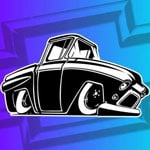
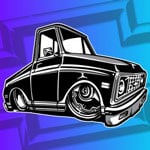
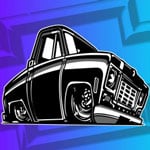
What is an OBS truck? OBS stands for “Old Body Style.” It’s the name truck people use for the 1988–1998 Chevrolet and GMC C/K pickups, GM’s GMT400 platform, along with the Tahoe, Yukon, Suburban and full-size Blazer built on the same bones. Nobody called them that when they were new. The name only appeared once the 1999 Silverado arrived with a new body, and the older trucks needed a label.
That’s the short answer. Below is the long one: which years and models count, how Chevy and GMC versions differ, the cab and bed combinations, and the quickest ways to tell an ’89 from a ’97 when you’re standing in front of one.
Shopping for your OBS? Our OBS Chevy truck parts fit 1988–98 Chevy and GMC pickups: billet hood hinges, the hidden tail light fuel filler kit, Gate Saver tailgate struts, billet door strikers and jamb vents, and hood strut kits.
Shop OBS Chevy partsWhat does OBS mean on a truck?
The OBS truck meaning is simple: Old Body Style, as opposed to NBS, “New Body Style,” the 1999–2006 GMT800 Silverado and Sierra. Once the GMT800 was on the road, forums, swap meets and parts catalogs needed a quick way to say “the square-ish one before it,” and OBS stuck. Today it works as a generation name the same way “square body” does for the 1973–87 trucks.
So if someone asks what an OBS truck is, the working definition is: a 1988–1998 Chevy or GMC C/K pickup, or one of the SUVs built on that platform. You’ll also hear Ford owners use OBS for the 1992–1997 F-Series, which we cover further down.
Which years and models are OBS?
| Truck | OBS years | Notes |
|---|---|---|
| Chevy / GMC C/K 1500 & 2500 pickups | 1988–1998 | Launched in spring 1987 as 1988 models |
| C/K 3500 & heavy-duty | 1988–2000 | HD versions ran alongside the new Silverado; the C3500HD chassis cab lasted to 2002 |
| Suburban | 1992–1999 | Moved to the GMT400 platform for 1992 |
| Full-size Blazer / GMC Yukon | 1992–1999 | The two-door Blazer became the Tahoe for 1995 |
| Tahoe | 1995–1999 | Two-door and four-door |
| Ford F-Series (informal) | 1992–1997 | Some Ford owners stretch it to 1987–97 |
The model codes follow GM’s usual pattern. C is two-wheel drive and K is four-wheel drive. 1500 is a half-ton, 2500 a three-quarter-ton and 3500 a one-ton. A K1500 is a half-ton 4×4, and a C3500 is a one-ton two-wheel drive, often a dually.
OBS vs square body vs NBS
These three names cover most of GM’s full-size trucks from the ’70s to the mid-2000s, and they overlap in a couple of places that confuse people:
- Square body (1973–1987): the C/K generation before OBS. The crew cab, Suburban and Blazer kept the square body until 1991, sold as the R/V series. Our square body Chevy guide covers that generation.
- OBS (1988–1998): the GMT400 pickups, plus the SUVs from 1992.
- NBS (1999–2006): the GMT800 Silverado and Sierra, which also brought the Silverado name in as a model rather than a trim level.
If you want to see every nameplate change side by side, from the Suburban to the Sierra to the Tahoe, our Chevy, GMC and Ford nameplate timeline lays it out year by year.
Chevy vs GMC OBS trucks
Mechanically the Chevrolet and GMC versions are the same truck. What changes is the grille, the badging and the trim names. On the Chevy side, “Silverado” was the top trim, not the model name, sitting above Cheyenne and Scottsdale, with the W/T (Work Truck) as the stripped-down option. GMC sold the same pickup as the Sierra, with SL and SLE trims. Most body, bed and interior parts interchange between the two. Grilles, emblems and a few trim pieces don’t.
Cabs, beds and configurations
- Regular cab: the classic two-door, and the one most street truck builds start from.
- Extended cab: offered from 1988, GM’s first extended cab pickup. A third door on the passenger side became an option for 1996.
- Crew cab: four full doors, added to the GMT400 line for 1992.
- Fleetside bed: smooth-sided, in 6.5-foot (short) and 8-foot (long) lengths.
- Sportside bed: the step-side look with flared rear fenders, 6.5 feet only. It replaced the old Stepside.
How to tell OBS years apart
From ten feet away, a 1988 and a 1998 look almost identical. These are the changes that give a year away, and the ones that matter when you’re ordering parts:
| Year | What changed |
|---|---|
| 1988 | GMT400 pickups launch. Throttle-body injected gas engines. Regular and extended cabs, Fleetside and Sportside beds |
| 1990 | 454 SS sport truck arrives (built through 1993) |
| 1992 | Crew cab joins the line. Suburban and full-size Blazer/Yukon move to GMT400. 6.5L turbo diesel added |
| 1994 | Refreshed grilles on Chevy and GMC. Third brake light above the rear window |
| 1995 | All-new dash, door panels and seats, with a driver’s airbag. Tahoe name replaces the two-door Blazer |
| 1996 | Vortec engines (4300, 5000, 5700, 7400) replace the TBI versions. Optional third door on extended cabs |
| 1997 | Passenger airbag becomes available |
| 1998 | Last year for the light-duty OBS pickups |
The two splits that matter most for parts are the 1995 interior and the 1996 engines. A 1988–94 dash and a 1995–98 dash share almost nothing, so switches, bezels, knobs and interior trim are usually listed by those ranges. Under the hood, a 1996–98 Vortec 350 and a 1988–95 TBI 350 take different intakes, sensors and several engine accessories. If you’re not sure which your truck has, the build date on the driver’s door jamb sticker settles it.
The VIN settles it quickest. Run it through our Chevy truck VIN decoder: a C or K in the fifth character means an OBS, while an R or V means one of the square body trucks GM kept building through 1991. The RPO sticker in the glove box covers the rest: our RPO code decoder reads the engine, gears and trim off it.
Engines you’ll find in an OBS truck
- 1988–1995: 4.3L V6, 5.0L (305) and 5.7L (350) V8s, and the 7.4L (454) V8, all with throttle-body injection. Diesel options were the 6.2L and, from 1992, the 6.5L turbo diesel.
- 1996–1998: the Vortec 4300, 5000, 5700 and 7400, with better heads and sequential port injection. The 6.5L turbo diesel carried on.
What about Ford OBS trucks?
In Ford circles, OBS usually means the 1992–1997 F-150, F-250 and F-350, the generation before the rounded 1997-up F-150. Some owners include the 1987–91 trucks too. It’s the same idea: the old body, named after a new one arrived. The parts in our OBS section are for the GM trucks. Ford owners should head to our classic Ford truck parts instead.
Why OBS trucks are so popular now
OBS trucks sit in a sweet spot, and that is a big part of the answer to what is an OBS truck worth building. They’re old enough to have simple electronics and a small-block V8 you can work on in a driveway, but new enough to come with fuel injection, air conditioning and a comfortable cab. There were a lot of them built, so donor trucks and used parts are still around, and the clean, flat body lines take a drop, a set of big wheels or a tidy stock restoration equally well. Regular cab short beds are the most sought-after starting point, but extended cabs and crew cabs are just as easy to build.
Parts for your OBS truck
Everything we make and stock for the 1988–98 trucks is in one place: OBS Chevy parts section. For the SUVs, there’s a separate page covering which parts fit the OBS Tahoe, Yukon and Suburban. A few of the most popular:
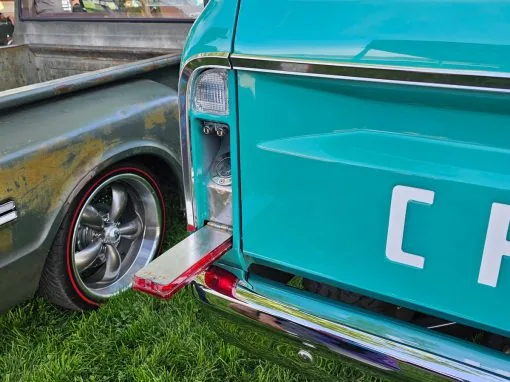
- Hidden tail light fuel filler kit: moves the fuel door behind the tail light for a smooth bedside.
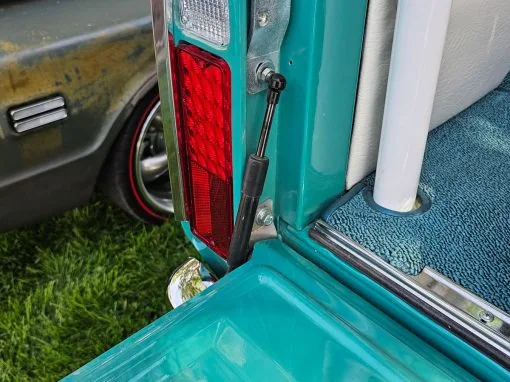
- Tailgate saver shock: lets the tailgate down slowly instead of dropping on its cables.
- Install walkthroughs for OBS parts live in our 1988–98 installation guides.
OBS truck FAQ
What does OBS truck mean in one line?
Old Body Style: the 1988–1998 Chevrolet and GMC C/K pickups and their SUV siblings.
Is a 1999 Silverado an OBS?
A 1999 Silverado 1500 is not. It’s the first NBS year. The exception is heavy-duty: some 1999–2000 C/K 2500 and 3500 trucks were still built on the old body and sold alongside the new Silverado, so check the body, not just the year.
Is a Tahoe or Suburban an OBS?
Yes. The 1992–1999 Suburban, the 1995–1999 Tahoe and the 1992–1999 Yukon share the OBS front end, dash and many body parts with the pickups.
Is a square body the same as an OBS?
No. Square body is the earlier 1973–87 generation. OBS starts with the 1988 model year, although square body crew cabs, Suburbans and Blazers stayed in production until 1991.
0 Comments