




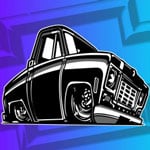
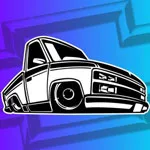




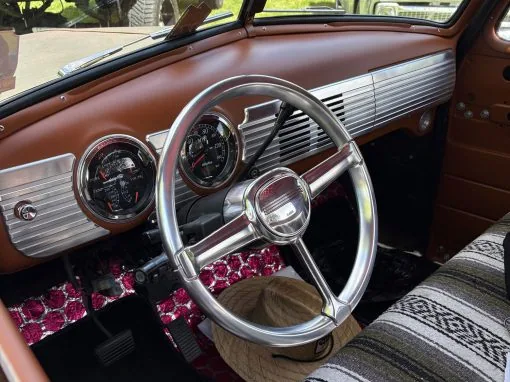
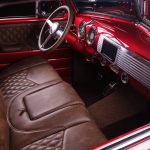

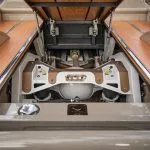
The square body Chevy is GM’s 1973–1987 C/K pickup: flat sides, a squared-off cab and one of the longest production runs of any American truck. Chevrolet called it the “Rounded Line” generation when it was new. Owners have called it the square body (or squarebody) for decades, and today it’s one of the most popular classic trucks to restore, drive and modify.
This guide covers the square body years and models, the year-by-year changes that let you date a truck, the Chevy and GMC trim levels, the engines, and how to approach a restoration without buying the wrong parts along the way.
Square body years and models
Square body pickups were built for the 1973 through 1987 model years. When the new 1988 C/K (the truck now called the OBS) replaced the pickup, GM kept building some square body models under a new name, the R/V series:
- 1973–1987: C/K pickups, regular cab and crew cab, plus the Blazer, Jimmy and Suburban.
- 1987: the line is renamed R/V (R for two-wheel drive, V for four-wheel drive) ahead of the new C/K.
- 1988–1991: R/V crew cabs, one-ton trucks, the Suburban and the full-size Blazer and Jimmy stay in production with square body styling.
The model codes are the same across the run. C means two-wheel drive and K means four-wheel drive. 10 is a half-ton, 20 a three-quarter-ton and 30 a one-ton. A C10 is a two-wheel-drive half-ton, the most common square body, and a K20 is a three-quarter-ton 4×4.
Cabs, beds and body styles
- Regular cab: the two-door, and the basis of most square body builds.
- Crew cab: four doors and a full rear seat, offered from 1973, mostly on three-quarter and one-ton trucks.
- Bonus Cab: the crew cab body without the rear seat, giving lockable inside storage. Introduced for 1975.
- Fleetside / Wideside: the smooth-sided bed (Wideside is GMC’s name), in 6.5-foot and 8-foot lengths.
- Stepside / Fenderside: the narrow bed with exposed rear fenders (Fenderside at GMC), also 6.5 and 8 feet.
Square body Chevy year-by-year changes
The fastest way to date a square body is the front end. The body behind the doors barely changed in 15 years, but the grille and headlights changed often:
| Year | What changed |
|---|---|
| 1973–74 | Launch. Recessed grille with orange turn signals |
| 1975 | New, brighter grille on Chevy. Scottsdale and Silverado trims introduced |
| 1977 | Revised grille with larger segments. Larger interior door panels |
| 1979 | Minor grille facelift |
| 1980 | All-new Chevy grille. Rectangular headlights appear on the Silverado |
| 1981 | The big one: everything forward of the windshield reshaped, with a new hood, fenders, grille and bumper. Rectangular headlights on every model, stacked four-light setups on upper trims |
| 1982 | 6.2L diesel replaces the Oldsmobile diesel. Chrome bumper and grille trim standard |
| 1983 | Revised grille with the turn signals behind it |
| 1985 | Last grille change for the pickups. 4.3L V6 replaces the 250 six |
| 1987 | Renamed R/V. Gas engines get throttle-body injection |
For parts, the split that matters most is 1980 versus 1981. A 1973–80 truck and a 1981–87 truck share the cab, doors and bed, but the hood, fenders, grille, header panel, bumper and a lot of lighting are different. If you’re buying front-end sheet metal, know which side of that line your truck is on. For a single year, our year pages narrow it down, for example 1980 Chevy truck parts or 1987 Chevy truck parts.
To pin down the year from the paperwork, run the serial number through our Chevy truck VIN decoder. It reads the 13-character 1973-80 serial, the 17-character VIN used from 1981 and the partial serial stamped on the frame.
Chevy and GMC square body trim levels
| Years | Chevrolet | GMC |
|---|---|---|
| 1973–74 | Custom, Custom Deluxe, Cheyenne, Cheyenne Super | Custom, Super Custom, Sierra, Sierra Grande |
| 1975–81 | Custom Deluxe, Scottsdale, Cheyenne, Silverado | Sierra, Sierra Grande, High Sierra, Sierra Classic |
| 1982–87 | Custom Deluxe, Scottsdale, Silverado | Sierra, High Sierra, Sierra Classic |
Appearance packages such as Chevrolet’s Bonanza and GMC’s Royal Sierra were added on top of these. Trim level affects the dash bezel, door panels, seat, moldings and badges, so it’s worth knowing which your truck left the factory with if you’re restoring it to original.
Square body engines
- Sixes: the 250 and 292 inline sixes, replaced on light trucks by the 4.3L (262) V6 in 1985.
- Small-block V8s: the 305 (from 1977) and the 350, the most common V8 in these trucks.
- Bigger V8s: the 400 small block on K-series 4x4s from 1975 to 1980, and the 454 big block on heavier trucks.
- Diesels: the Oldsmobile 350 diesel from 1978, then the 6.2L Detroit Diesel from 1982.
Restoring a square body Chevy
Square body Chevy restoration has one big advantage over older trucks: almost every panel is reproduced, and the drivetrain is the same small-block and GM running gear found in millions of vehicles. The trick is doing the work in an order that doesn’t make you do anything twice.
1. Assess the truck honestly
Start with rust, because it decides the budget. On a square body, check the cab corners, rocker panels, floor pans, the lower front fenders behind the wheels, the door bottoms and the bed floor and wheelhouses. Look at the frame, especially where the rear springs mount. Then check the mechanicals: leaks, noises, the condition of the brake lines and fuel lines, and the wiring behind the dash. Write it all down. That list becomes your plan.
2. Decide what kind of build it is
A frame-off original restoration, a driver-quality refresh and a lowered street truck all need different parts. Decide early whether you’re keeping it factory-correct or building it your way, because it changes which parts you buy and in what order. Set a budget and a timeline, and expect the timeline to slip.
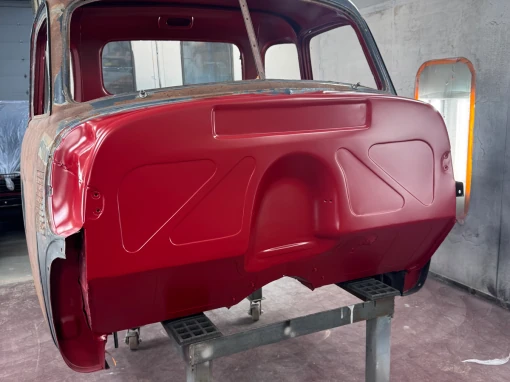
3. Body and sheet metal first
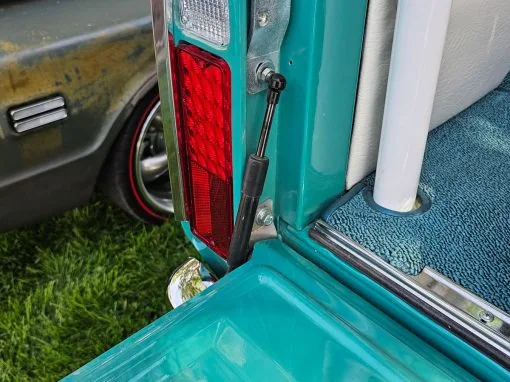
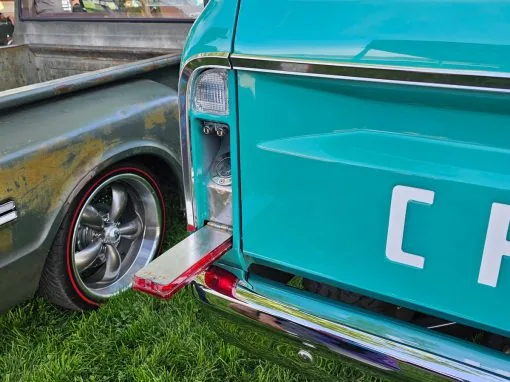
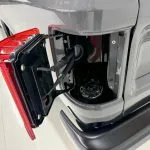
Fix the metal before the mechanicals and the interior. Cut out rust and replace it with new panels rather than filling it. Cab corners, floors and rockers are the usual repairs. This is also the time to make any custom changes to the body, like shaving the bedside fuel door with a hidden tail light fuel filler kit or filling holes in the dash with a radio repair panel, so the welding happens before paint.
4. Chassis, suspension and drivetrain
With the body sorted, rebuild or upgrade the frame, suspension and brakes. Lowering kits, disc brake upgrades and modern steering boxes are all common on square bodies. If you’re swapping the engine, a small-block or LS-based V8 is the usual choice and parts support is excellent. Replace the fuel and brake lines while everything is accessible.
5. Paint, then interior
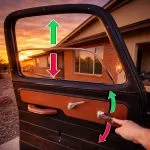
Paint comes after the metalwork and before the interior goes back in. When you rebuild the cab, it’s worth doing the upgrades that make the truck nicer to drive: sound deadening, a power window kit, new seat upholstery and billet door handles. A tailgate latch kit finishes off the bed.
6. Keep it maintained
Once it’s done, regular fluid changes, greasing the front end, keeping drain holes clear and storing it dry will keep a square body going for decades. Rust on a restored truck almost always starts where water was left to sit.
Square body parts
Everything we build and stock for 1973–87 trucks is in our square body parts section, from sheet metal and billet accessories to tailgate and interior upgrades. Step-by-step installs are in our 1973–87 installation guides, and if you’re shopping by model rather than year, see our C10 restoration parts by generation.
Square body FAQ
What years are square body Chevys?
1973 to 1987 for the C/K pickups. Crew cabs, one-tons, the Suburban and the full-size Blazer and Jimmy continued with the square body until 1991 as the R/V series.
Is a square body the same as a C10?
Not exactly. C10 is the model code for a two-wheel-drive half-ton, and Chevrolet used it from 1960 to 1987. A 1973–87 C10 is a square body, but so is a K20 or a C30. A 1967–72 C10 is not.
What’s the difference between a 1980 and a 1981 square body?
The 1981 got a new front end: hood, fenders, grille, bumper and headlights all changed, giving the truck a lower, more aerodynamic nose. The cab, doors and bed stayed the same.
Is a 1988 Chevy truck a square body?
A 1988 pickup is usually an OBS. A 1988–91 crew cab, one-ton, Suburban or Blazer can still be a square body, sold as the R/V series.
0 Comments